By Swift Reporter
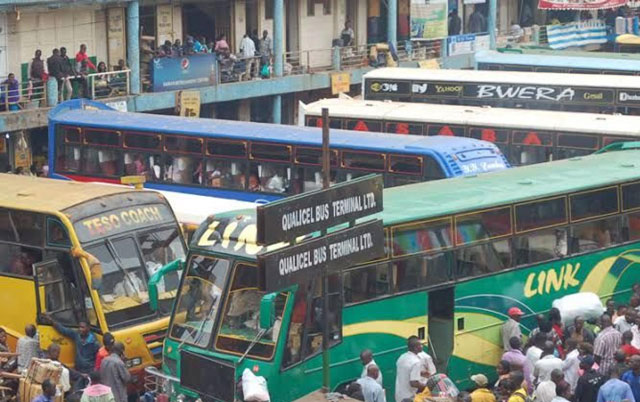
Travellers heading to western Uganda are facing fresh financial pressure after bus operators announced higher transport fares, adding to the cost of travelling as families prepare for the festive season.
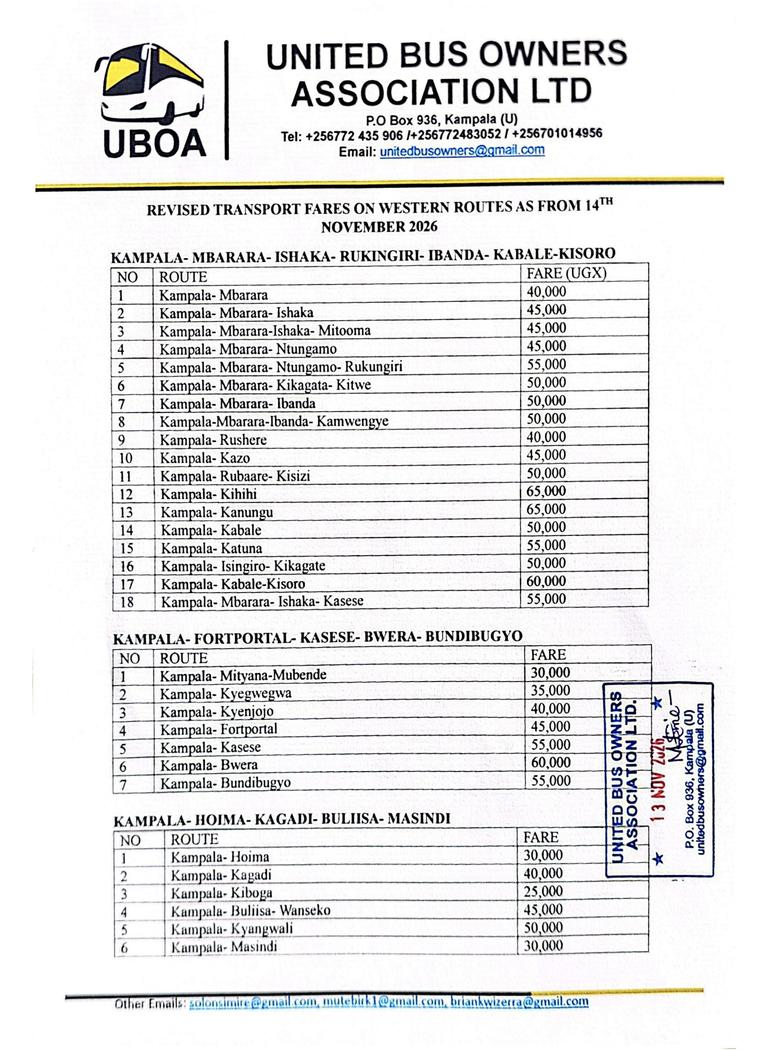
The revised fares, which take effect on November 14, 2026, are expected to hit passengers travelling from Kampala to major towns across south-western Uganda, the Rwenzori region and Bunyoro, forcing many to dig deeper into their pockets to reach their destinations.
In a notice stamped November 13, the United Bus Owners Association outlined new fares for several routes, with passengers travelling from Kampala to Mbarara now required to pay Shs40,000, while those heading to Kabale will part with Shs50,000.

The Kampala-Kisoro journey has been priced at Shs60,000, making it one of the more expensive routes on the revised schedule.
Passengers travelling to Fort Portal will pay Shs45,000, while those heading to Kasese will pay Shs55,000. The Kampala-Hoima route has been set at Shs30,000.
The announcement comes at a particularly difficult time for many households, with the festive season traditionally bringing increased demand for transport as people travel upcountry to reunite with relatives, attend celebrations and participate in end-of-year activities.
With the new rates taking effect just weeks before Christmas, families planning journeys to western Uganda may now have to revise their travel budgets or set aside additional money to meet the increased transport costs.

Although the association’s notice does not indicate the previous fares or specify the exact percentage increase on each route, the new schedule signals additional pressure on passengers already grappling with the rising cost of living.
The fare adjustment comes amid persistently high fuel prices, which have increased operating costs for transport businesses.
Diesel prices at some Kampala fuel stations have been approaching Shs7,500 per litre, while petrol has crossed the Shs7,000 mark, putting pressure on motorists, public transport operators and businesses that depend heavily on road transport.
Interestingly, local pump prices have remained elevated despite a recent decline in international crude oil prices and gains by the Uganda shilling, delaying the relief consumers might have expected from improvements in global market conditions.

This is partly because fuel purchased earlier may still reflect higher acquisition costs, exchange rates and transportation expenses, meaning changes in international prices do not always translate into immediate reductions at local fuel stations.
The latest adjustment also follows a similar development in northern Uganda, where bus operators introduced higher fares effective November 1, 2026.
Operators in the region reportedly cited rising fuel prices, spare parts and other operational expenses as reasons for the adjustment. Ordinary bus fares from Lira to Kampala consequently rose from Shs30,000 to Shs40,000.
The developments point to growing pressure across the public transport sector, with passengers increasingly bearing the cost of higher operating expenses.
For travellers heading west, however, the immediate concern is the additional money they must find before boarding buses, particularly at a time when end-of-year expenses, school-related costs and household demands are already stretching family budgets.