

At the centre of this infrastructure is the hospitality industry, particularly luxury hotels that provide more than accommodation. They serve as important venues for international conferences, diplomatic engagements, investment forums, corporate meetings and high-level government functions.
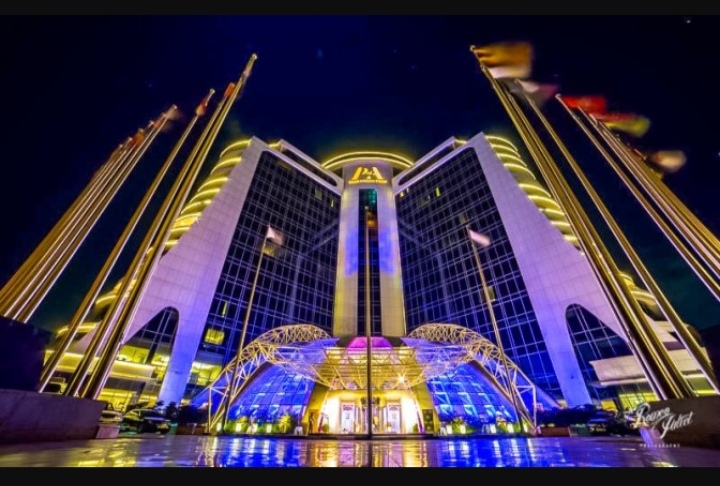
In Kampala, the Pearl of Africa Hotel, developed by AYA Group and subsequently associated with the WIN 5 Hotels & Spa identity, represents an ambitious investment in this segment of Uganda’s hospitality industry.
Its development and subsequent commercial journey offer an interesting perspective on the relationship between private-sector investment, international engagement and Uganda’s broader economic ambitions.
Economic diplomacy is commonly associated with embassies, bilateral negotiations, trade agreements and international investment missions. However, the infrastructure that supports these engagements is equally important.
When foreign ministers, ambassadors, investors, business executives and international development partners visit Uganda, they require quality accommodation, conference facilities, meeting spaces, catering and professional hospitality services.
Luxury hotels consequently become part of the practical infrastructure that facilitates international relations and economic cooperation.
An international investment conference, for instance, brings together government officials, private-sector leaders, foreign investors and development partners. Beyond the discussions and potential agreements, such gatherings generate demand for accommodation, transport, restaurants, event management and other supporting services.
The economic benefits therefore extend beyond the hotels themselves, creating opportunities across several sectors of the economy.
For Kampala, having the capacity to host high-level international engagements strengthens its competitiveness as a destination for regional and continental meetings.
When Pearl of Africa Hotel officially opened in October 2017, it represented one of Uganda’s most ambitious additions to its premium hospitality infrastructure.
The 20-storey property was developed with 253 rooms, including 42 suites, alongside extensive leisure, dining and conference facilities.
Strategically located in Nakasero, Kampala, the hotel was positioned to serve international visitors, corporate executives and high-end business travellers, given its proximity to government institutions, corporate offices and diplomatic establishments.
Its development reflected an ambition to provide hospitality infrastructure capable of meeting the expectations of international clientele and supporting Uganda’s growing engagement with the global business community.
Such investments are increasingly important as countries compete to attract international conferences, corporate travel and investment-related events. The availability of quality accommodation, reliable services and suitable meeting facilities can influence the choice of destination for international organisers.
A country may have attractive investment opportunities, but the experience of visiting investors also contributes to their perception of its business environment.
One of the strongest links between hospitality and economic diplomacy is the Meetings, Incentives, Conferences and Exhibitions (MICE) industry.
MICE tourism involves organised business events that bring together professionals, companies, government representatives and international institutions.
Unlike conventional leisure tourism, business-event visitors travel primarily for professional engagements and often generate demand for accommodation, conference packages, transport, restaurants and other services.
A single international conference can therefore stimulate economic activity across multiple sectors.
Uganda has considerable opportunities to expand this market by leveraging its strategic position in East Africa, diplomatic relationships, international partnerships and growing investment profile.
Kampala’s hospitality establishments play an important role in this ambition, alongside major conference destinations such as Speke Resort Munyonyo and the Uganda Convention Centre.
The hosting of the 19th Non-Aligned Movement Summit and the Third South Summit in January 2024 demonstrated Uganda’s ability to attract major international gatherings. Such events provide opportunities to showcase the country’s hospitality infrastructure, business environment and capacity to accommodate high-level international delegations.
The contribution of luxury hotels to economic diplomacy extends beyond hosting conferences.
International investors visiting Uganda frequently require suitable environments for meetings with government officials, prospective business partners, financial institutions and professional advisers.
Hotels that combine accommodation, meeting facilities, dining and business services offer convenience for visiting delegations and corporate executives.
The quality of these services can contribute to an investor’s overall experience and perception of Uganda as an investment destination.
Reliable internet connectivity, professional service, security, accessibility, meeting facilities and accommodation standards all form part of the business-travel experience.
In this respect, hospitality infrastructure complements the work of investment-promotion agencies, diplomatic missions and private-sector organisations seeking to attract international capital.
The economic contribution of a luxury hotel should not be measured solely by room occupancy and revenue.
Its operations create demand for a wide network of local suppliers and service providers, including farmers, food distributors, transport operators, laundry companies, cleaning services, security firms, maintenance contractors and event organisers.
Hotels also create employment opportunities in management, catering, housekeeping, finance, marketing, information technology and customer service.
These activities support skills development and professional growth within Uganda’s hospitality industry.
However, maximising the economic benefits requires deliberate efforts to strengthen local procurement, develop hospitality skills and integrate domestic businesses into hotel supply chains.
The greater the participation of local suppliers, the more value hotel operations can generate within the domestic economy.
Uganda’s premium hospitality industry operates in an increasingly competitive East African market.
Kampala has established hospitality properties, including Kampala Serena Hotel, Sheraton Kampala Hotel and Speke Resort Munyonyo, alongside other accommodation and conference establishments.
Competition is no longer determined by the appearance of buildings or the number of available rooms alone. Service standards, conference capacity, international brand recognition, pricing, operational efficiency and customer experience are equally important.
Regional destinations such as Nairobi, Kigali and Dar es Salaam are also positioning themselves to attract international conferences, corporate travellers and major events.
Uganda must therefore continue investing in its wider visitor experience if it is to strengthen its competitiveness in the regional MICE market. This includes improvements in transport infrastructure, tourism promotion, digital connectivity, visa facilitation and the overall business environment.
Despite the opportunities, developing and operating a major luxury hotel is a capital-intensive undertaking.
High energy costs, maintenance expenses, staffing requirements, financing obligations and fluctuations in international travel demand can place considerable pressure on hotel operators.
The Pearl of Africa Hotel’s financial and legal challenges under its original investment structure illustrate some of the complexities associated with large-scale hospitality investments. Its subsequent association with the WIN 5 Hotels & Spa identity also reflects changes in the property’s commercial journey.
For investors, the experience underscores the importance of sustainable financing structures, realistic revenue projections, effective management and long-term operational planning.
For Uganda, it highlights the need to create an investment environment that encourages major hospitality projects while supporting their long-term commercial viability.
Uganda’s diplomatic relationships, participation in international organisations and growing regional influence provide opportunities to attract more international conferences and business events.
Kampala could strengthen its position through a coordinated MICE strategy involving government institutions, tourism authorities, hotels, airlines, conference organisers and private-sector stakeholders.
Such collaboration would help identify international events that Uganda can competitively host while creating partnerships to attract them.
There is also an opportunity to connect business tourism with leisure tourism by encouraging international delegates to extend their visits to Uganda’s national parks, cultural attractions and other destinations.
This approach would increase visitor spending, extend hotel stays and create additional opportunities for tourism operators and local businesses.
Luxury hotels are an important, sometimes overlooked, component of a country’s economic diplomacy infrastructure. They accommodate the people who negotiate business agreements, attend international conferences, explore investment opportunities and participate in diplomatic engagements.
For Uganda, strengthening the hospitality sector is therefore about more than attracting tourists. It is also about building the capacity to host international business, diplomatic and institutional activities.
The Pearl of Africa Hotel’s investment story illustrates the ambition behind developing world-class hospitality infrastructure, while its subsequent commercial challenges highlight the importance of financial sustainability and effective hotel management.
As Uganda seeks to deepen its international economic relationships and strengthen Kampala’s position as a regional business destination, the hospitality industry will remain an important partner in translating diplomatic connections into investment opportunities, tourism revenue, employment and wider economic activity.
Ultimately, a country that wants to attract the world must also have the infrastructure, services and hospitality capacity to host it.