By Swift Reporter
Car dealers in Uganda have threatened to close their bonded warehouses over a disputed Uganda Revenue Authority (URA) demand for 1% stamp duty on motor vehicles sold on credit since 2019.
The dealers, under their association chairman, Charles Kamunvi, say the proposed tax assessment would impose an additional financial burden on their businesses, arguing that their credit sales should not be treated as hire purchase transactions.
Speaking after a meeting with the Ministry of Works and Transport, Uganda National Bureau of Standards (UNBS), URA and motor vehicle inspection service providers, Kamunvi said dealers were concerned about what they described as an additional stamp duty obligation on vehicles sold to customers who pay in instalments.
He explained that under their business arrangement, a customer can purchase a vehicle worth Shs50 million and be allowed one or two months to complete payment, without entering into a hire purchase agreement.
However, URA is reportedly demanding 1% stamp duty on such transactions dating back to 2019, a move the dealers say they cannot afford.
“We cannot agree to pay stamp duty on every credit sale we have made since 2019. We are likely to close our bonded warehouses if these assessments are enforced,” Kamunvi said.
He noted that dealers already pay stamp duty during vehicle registration and transfer, with additional charges arising from the existing tax requirements.
The chairman also blamed some customers for delaying vehicle transfers even after completing payments, saying this has exposed dealers to further complications because vehicles remain registered under their businesses.
He urged customers who have cleared their vehicle payments to complete ownership transfers to avoid unnecessary tax complications.
Kamunvi appealed to government to intervene and reconsider the proposed assessments, arguing that dealers should not be penalised for customers’ failure to transfer vehicles.
Beyond the tax dispute, the meeting also addressed challenges surrounding pre-export motor vehicle inspections, particularly discrepancies in chassis numbers, engine numbers and vehicle model years.
Kamunvi said some vehicles imported from different countries, particularly Dubai and Japan, sometimes present similar chassis numbers, creating complications for dealers during clearance and registration.
He proposed the establishment of a centralised system through which vehicle chassis numbers could be verified against existing records to prevent the importation and registration of vehicles with duplicate identification details.
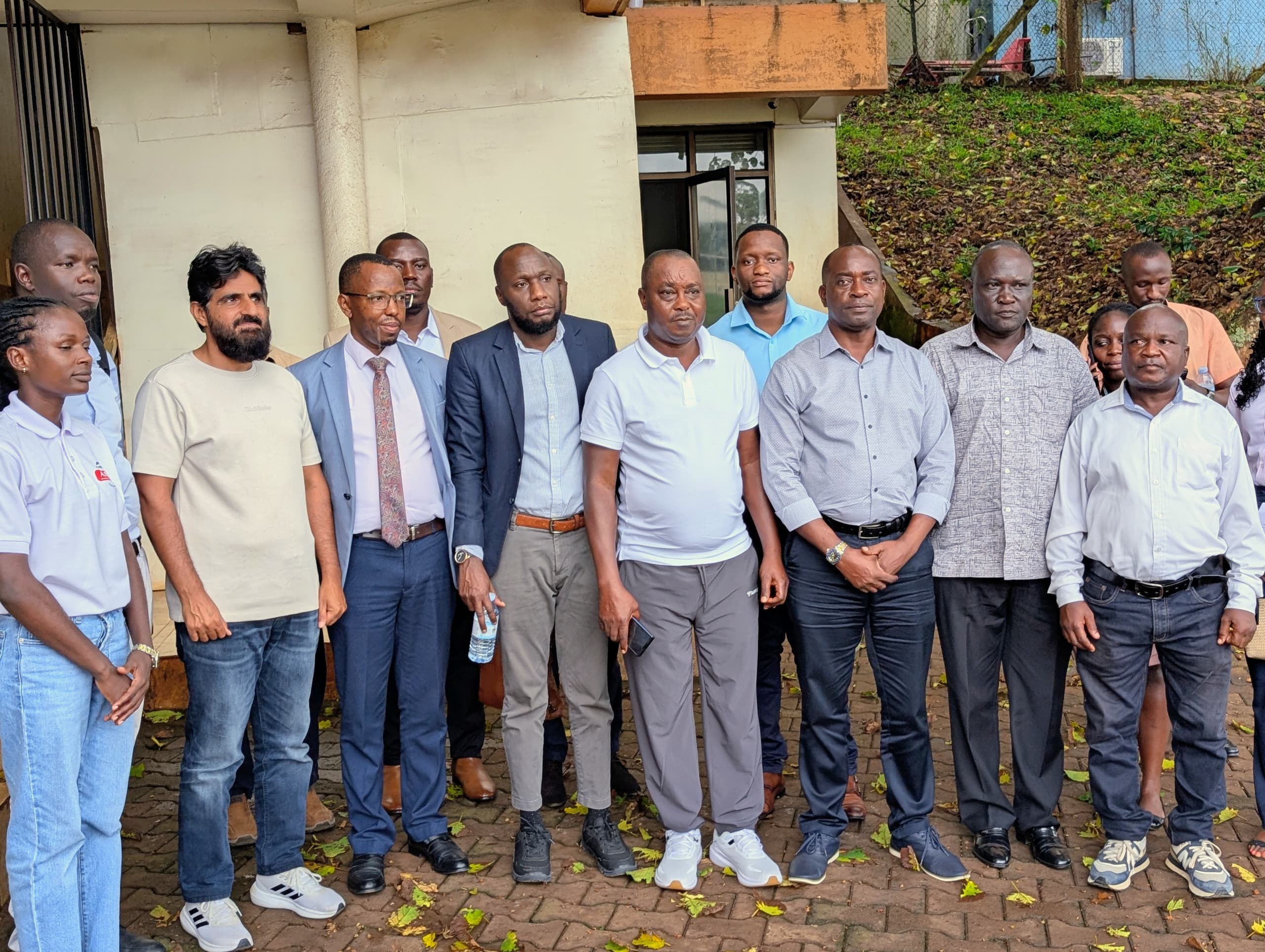
The engagement brought together government agencies, motor vehicle dealers and inspection service providers to review challenges affecting the industry and improve service delivery.
David Kyakuraga, the country representative of East African Automobile Company (EAA), said the annual meeting was organised to assess the quality of inspection services and strengthen cooperation between the company and its clients.
EAA is contracted by UNBS to conduct pre-export inspections of motor vehicles imported into Uganda.
Kyakuraga said the meeting provided an opportunity for dealers to raise concerns that had previously received inadequate attention, with government agencies offering responses and committing to follow up on issues requiring further action.
He said one of the key resolutions was that whenever discrepancies arise in vehicle inspection particulars, the affected parties should communicate promptly to establish where the errors originated rather than leaving dealers to bear the consequences alone.
He added that identifying the source of discrepancies would help address existing cases while preventing similar problems in future.
The engagement is expected to strengthen coordination among regulators, inspection providers and motor vehicle dealers, although the dispute over stamp duty remains a major concern for the industry.