

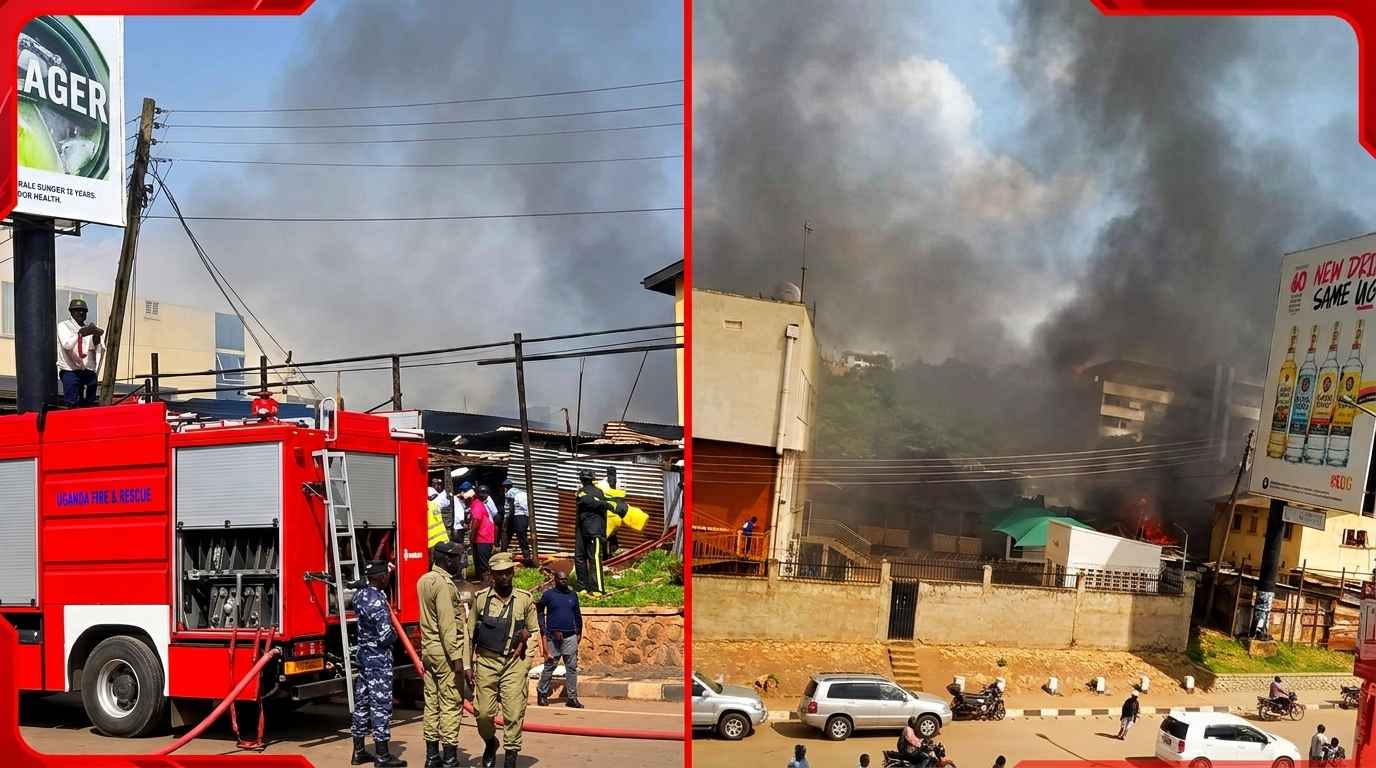
A fire broke out at Wandegeya Police Station in Kampala on Thursday afternoon, triggering panic as firefighters rushed to the scene to contain the blaze.
The incident occurred at approximately 3:30pm, with thick black smoke billowing from the police station and rising into the skies above the busy Wandegeya area.
Firefighters were seen working to extinguish the flames as police personnel and other people at the scene reportedly scrambled to rescue their belongings amid fears that the fire could spread and destroy more property.
The cause of the fire had not been established by the time of publication, while the extent of the damage and whether anyone had been injured remained unclear.
The incident also disrupted traffic around Wandegeya, with a section near the traffic lights closed as emergency teams responded to the emergency. Motorists and other road users were affected as authorities worked to manage the situation and facilitate firefighting operations.
Wandegeya is one of Kampala’s busy areas, hosting businesses, educational institutions, offices and public facilities. The fire therefore attracted attention from people in the surrounding neighbourhood as emergency responders battled to bring it under control.
Authorities are expected to establish what triggered the blaze and assess the damage after the situation is brought under control. Until an official explanation is provided, the cause of the fire remains unknown, and it would be premature to attribute it to any particular factor.
Common Causes Of Fires
Although the cause of the Wandegeya Police Station fire remains unknown, fires in buildings can result from several factors, including electrical faults, overloaded sockets, damaged wiring, unattended cooking, leaking gas cylinders, careless handling of flammable materials and the improper use of candles or other open flames.
Electrical fires can occur when faulty equipment overheats, wiring becomes damaged or electrical circuits are overloaded. Poor maintenance of electrical installations can also increase the risk of a fire, particularly in buildings with numerous appliances and electronic devices.
Other incidents may result from human error, including leaving heat-producing equipment unattended, storing combustible materials near sources of heat or failing to extinguish open flames properly.
How Buildings Can Prevent Fires
Fire safety experts generally recommend regular inspection and maintenance of electrical systems, avoiding overloaded sockets, replacing damaged cables and ensuring that electrical installations are handled by qualified technicians.
Buildings should also be equipped with suitable fire extinguishers, smoke detectors and clearly marked emergency exits. Fire alarms and firefighting equipment should be inspected regularly to ensure they remain functional when needed.
Flammable substances should be stored safely and away from heat sources, while gas cylinders and related equipment should be checked for leaks. Staff and occupants should also receive basic fire safety training, including how to raise an alarm, evacuate safely and use firefighting equipment where appropriate.
In the event of a fire, people should prioritise their safety, alert emergency responders and evacuate through safe exits rather than risking their lives to retrieve personal belongings. People should avoid entering smoke-filled buildings and should never re-enter a burning structure until authorities declare it safe.
As firefighters continued efforts to contain the Wandegeya blaze, the immediate priority remained controlling the fire, protecting lives and preventing further damage.
Further details, including the cause of the fire, the extent of the destruction and any possible casualties, are expected as more information becomes available.