

By Swift Reporter
A reported bedbug infestation aboard a Qantas aircraft has triggered a major travel disruption, forcing the Australian airline to cancel a flight from Rome to Perth after passengers complained of being bitten during an earlier journey.
The incident left passengers scheduled to travel from Italy to Australia over the weekend facing unexpected delays after the airline grounded the aircraft for an extensive cleaning operation.
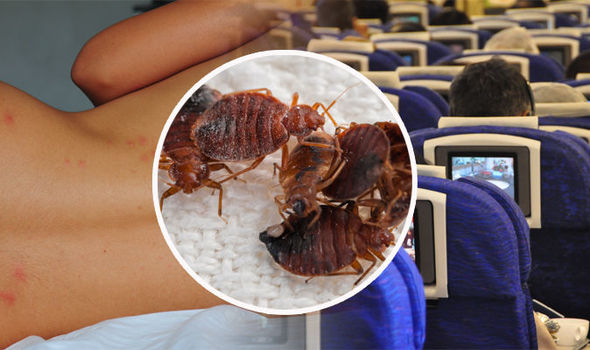
The scare emerged after travellers aboard Qantas flight QF5 from Perth to Rome on October 9 reported encountering bedbugs in the economy-class cabin. Their complaints prompted concerns about the insects spreading through passengers’ clothing, blankets and personal belongings.
One passenger, Hailey Bagnall, described a disturbing experience in an interview with Australian broadcaster 9News, saying the insects were crawling across passengers’ belongings and the aircraft’s interior.
“(They were) crawling over our belongings, our clothing, our Qantas blankets, and they were even crawling along the window,” Bagnall said.
The reports prompted the airline to take action, with the return service scheduled for Saturday cancelled to allow engineers and maintenance teams to carry out a deep clean of the aircraft.
Qantas confirmed the cancellation on Tuesday, apologising to affected customers while explaining that the cleaning operation followed an issue identified in a small number of economy-class seats.
“We sincerely apologise to customers for the cancellation of Saturday’s Rome to Perth service, which allowed our engineers and maintenance teams to carry out a deep clean of the aircraft after an issue identified on a small number of economy seats,” the airline said in a statement.
The carrier added that its aircraft cabins are cleaned regularly to a high standard and said it was still investigating the incident.
Passengers who had expected to fly from Rome to Perth on Saturday were provided with accommodation and booked onto alternative flights, according to the airline.
Although bedbugs are tiny, their ability to hide in luggage, clothing and upholstery makes them a persistent challenge in places where people travel and sleep. The insects are reddish-brown, flat-bodied parasites that feed on human blood and are found in different parts of the world.
According to the US Centers for Disease Control and Prevention (CDC), bedbugs commonly bite people while they are sleeping. Their bites can resemble those of mosquitoes, with some people developing itchy, swollen skin reactions. The severity of symptoms can vary, particularly among people who are allergic to the bites.
Despite their name, bedbugs are not restricted to mattresses. They can hide in the seams and folds of luggage, overnight bags, folded clothing, bedding and furniture, making them difficult to detect and potentially allowing them to travel between locations.
The CDC warns that people can unknowingly transport the insects in their belongings, spreading them to new environments without realising it.
While bedbug bites do not usually require medical treatment beyond measures such as topical lotions to relieve itching, an infestation can require professional pest-control treatment.
For Qantas, the reported incident has raised an uncomfortable question about how an aircraft can be prepared for another long-haul journey when passengers have raised concerns about pests in the cabin.
The airline’s investigation is ongoing, and it has not publicly established the full extent of the reported infestation. For affected travellers, however, the immediate consequences were clear: a cancelled international flight, disrupted travel plans and an unexpected wait while the aircraft underwent cleaning.
The episode serves as a reminder that even routine journeys can be disrupted by small but persistent pests, particularly when they find their way into the confined spaces of aircraft cabins and passengers’ personal belongings.