By Swift Reporter
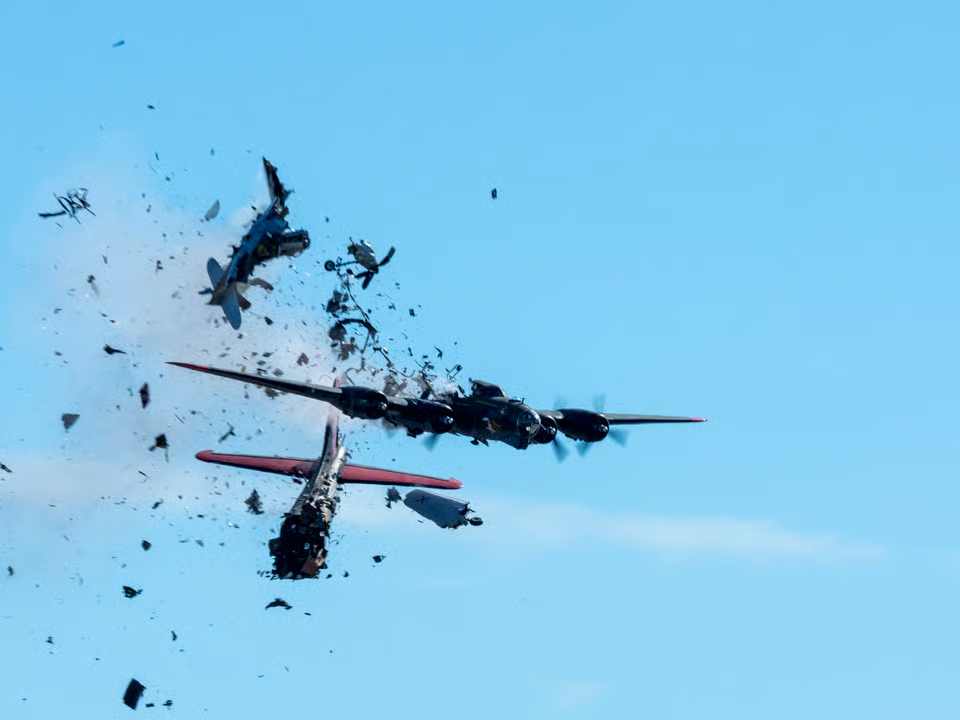
Four pilots have been killed after two Philippine Air Force (PAF) aircraft collided at low altitude during a training exercise over Fernando Air Base, south of the capital, Manila.
The aircraft crashed within the base perimeter following the mid-air collision, with no injuries reported among people on the ground, according to Air Force Colonel Alvin Capinguian.
The Philippine Air Force has not yet disclosed what caused the collision, but announced that all its remaining SF-260 training aircraft had been temporarily grounded as investigations into the incident get underway.
The military did not disclose how many SF-260 aircraft remain in its fleet.
The crash is another major setback for the Philippine military, which has struggled for years with limited funding and the challenge of modernising its air, land and naval forces.
The country’s armed forces have spent decades fighting communist insurgents and Muslim separatist groups, leaving resources stretched between internal security operations, disaster response and efforts to strengthen external defence.
Those pressures have intensified amid rising tensions with China over disputed territories in the South China Sea, where Manila has increasingly focused on maritime surveillance and protecting its territorial claims.
The latest tragedy also follows another fatal SF-260 crash in May, when two pilots died after a training aircraft went down in dense woodland on Mount Cabuyao in Benguet province, northern Philippines.
The country’s military has suffered several deadly aviation accidents in recent years. In July 2021, a military transport aircraft crashed while attempting to land at Jolo Airport, killing 53 people, including 50 military personnel and three civilians.
Investigators attributed that disaster to a combination of mechanical problems, poor weather and the crew’s response during the emergency.
The latest crash adds to concerns over the challenges of maintaining an ageing military aircraft fleet while expanding operational capabilities.
Once regarded as one of Southeast Asia’s more formidable air forces, the Philippine Air Force suffered decades of underinvestment and economic difficulties. The retirement of its last F-5 supersonic fighter jets in 2005 left the service heavily dependent on trainer aircraft, transport planes and helicopters for many of its operations.
Traditionally focused on supporting ground troops against domestic insurgencies and providing humanitarian assistance during frequent typhoons, the air force is now working to strengthen its ability to monitor and defend the country’s extensive maritime territory.
Under its military modernisation programme, the Philippines has been acquiring additional aircraft and equipment, including Black Hawk helicopters, air-surveillance radars and South Korean-made FA-50 light combat jets.
However, the service continues to face the challenge of maintaining a diverse fleet while meeting growing operational demands in a region marked by increasing geopolitical tensions.
The investigation into the collision is expected to establish what happened during the training exercise and whether any technical or operational factors contributed to the deaths of the four pilots.