

By Swift Reporter
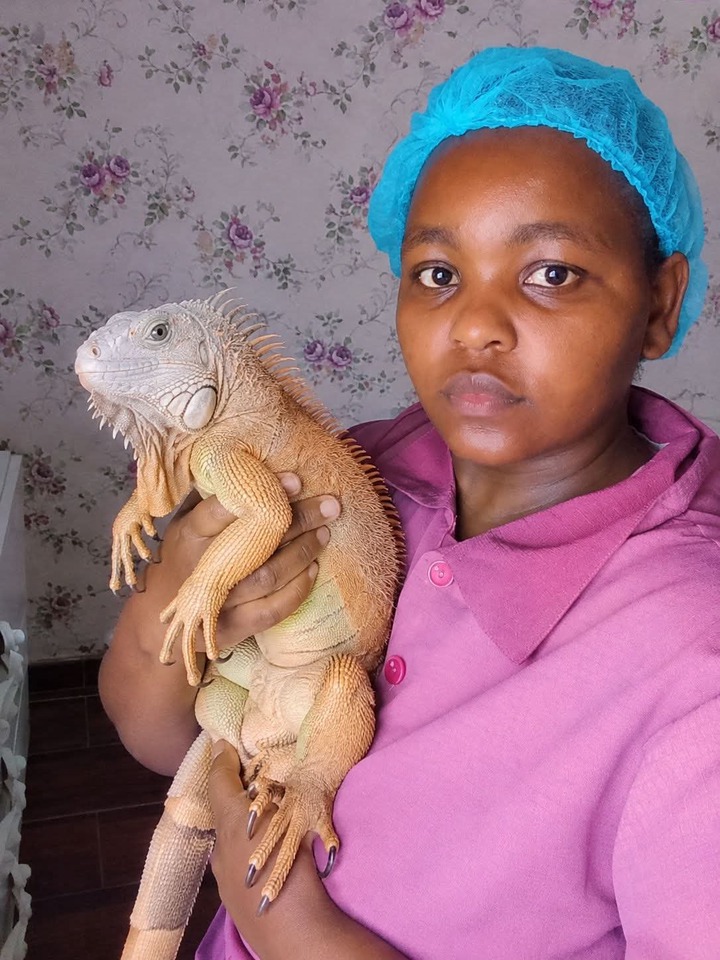
A Kenyan woman has amused social media users after revealing how she travelled to Saudi Arabia for a domestic job, only to discover that the “baby” she had been assigned to feed and wash was actually an iguana.
Identified as Keshie wa Stano, the woman shared the unexpected experience on social media, explaining how a misunderstanding about her duties left her surprised when she finally arrived at her employer’s home.
According to her account, she had been informed that several other workers were already employed in the household, leading her to believe that the workload would be manageable.
Her main responsibility, she was told, would be feeding and washing someone called Turki. Assuming the name belonged to a young child, Keshie prepared herself for what she expected to be an ordinary childcare assignment.
However, upon arriving at the residence, she discovered that Turki was neither a baby nor a member of the employer’s family, but an iguana kept as a household pet.
Turning the unexpected revelation into a humorous story, Keshie encouraged fellow job seekers not to give up simply because their experiences abroad differ from what they had anticipated.
“Usiogope, they are friendly and harmless. Usianze kupanga safari ya kurudi nyumbani. Tulisema adui ni umaskini tu, chapa mboka,” she said.
Loosely translated, she urged people not to panic or start planning their return home, adding that poverty remained the enemy and that they should keep working to earn a living.
Her account has sparked amusement online, with the story highlighting how assumptions about job responsibilities can lead to surprising discoveries, particularly for people travelling abroad in search of better economic opportunities.
Kenyans continue to seek domestic employment in Saudi Arabia and other Gulf countries to earn money and support their families back home. However, the nature of the work can vary from one household to another, making it important for prospective employees to understand their duties before travelling.
Keshie’s experience has also raised questions about how clearly employers communicate job expectations, including responsibilities involving household pets, before workers accept overseas placements.
While her encounter with Turki provided an amusing twist, not every experience abroad ends in laughter. Another Kenyan domestic worker, identified as Atieno, reportedly left her one-year employment contract before its expiry, with family challenges and deteriorating health cited among the reasons.
Together, the accounts illustrate the different experiences migrant workers can encounter while pursuing employment abroad, from unexpected household assignments to personal challenges that make completing a contract difficult.
For Keshie, however, the discovery that Turki was an iguana rather than a child has become a memorable tale, accompanied by a simple message: sometimes the journey to earning a living comes with surprises that require patience, preparation and a sense of humour.