

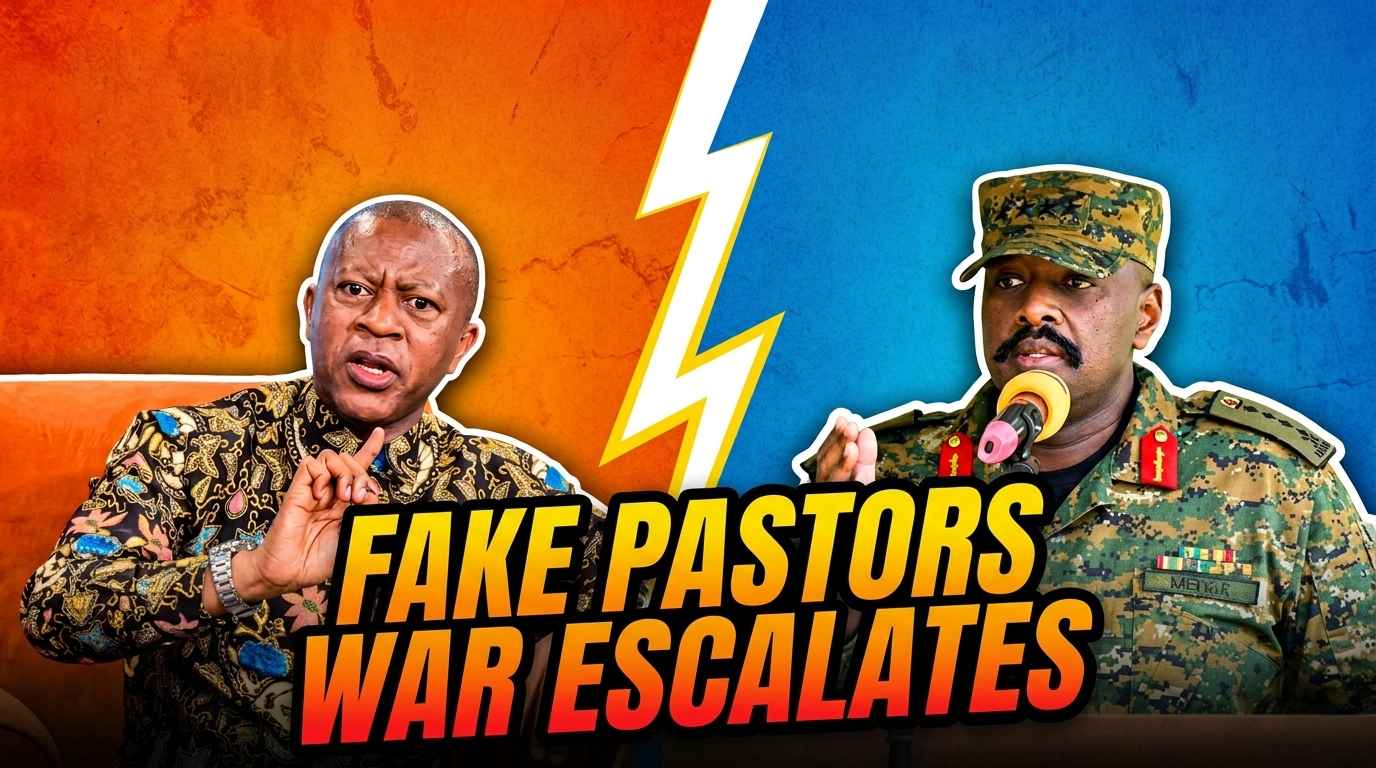
Chief of Defence Forces Gen Muhoozi Kainerugaba has weighed into the escalating dispute between social commentator Frank Gashumba and Uganda’s evangelical pastors, calling for respect for religious leaders while insisting that those who claim to perform miracles should be judged by their actions.
In a series of posts, Muhoozi defended religious freedom in Uganda, warned against disorder and said Gashumba should apologise to Christians across the country over his controversial remarks about pastors.
“Gashumba will apologize to Christians in the country. PLU has no problem with pastors in Uganda,” Muhoozi wrote, referring to the Patriotic League of Uganda, the political pressure group he leads.
His intervention comes after Gashumba intensified his criticism of self-proclaimed prophets, apostles and miracle workers, challenging them to demonstrate their healing powers on patients in hospitals and offering a financial reward to anyone who could prove the claims.
Gashumba has repeatedly insisted that his criticism is directed at religious figures he accuses of exploiting vulnerable believers, rather than Christianity or the existence of God.
The controversy has attracted responses from several pastors, some of whom have accused him of disrespecting religious leaders. Gashumba, however, maintains that those claiming to heal serious illnesses should be willing to demonstrate their abilities under verifiable conditions.
Muhoozi’s response struck a balance between defending religious leaders and cautioning against unquestioning acceptance of those who claim spiritual authority.
“On the issue of pastors, I urge caution,” he wrote, invoking the circumstances surrounding the birth of Jesus Christ to argue that religious messengers should not be dismissed because of their humble appearance or social standing.
He also cited Matthew 7:16, which teaches that people can be recognised by their fruits, suggesting that the conduct and actions of religious leaders should matter when assessing their claims.
“In Uganda, there is freedom of religion. As long as you are worshipping the Creator, Almighty God. The only religion that is COMPLETELY banned in Uganda is Satanism,” Muhoozi stated, adding that those engaging in the worship of the devil would face imprisonment.
He further rejected practices in which pastors allegedly make people fall during prayer sessions, saying such displays should not be confused with genuine Christian faith.
“No pastor can make me fall down. Maybe, I’ll make them fall down. God is not interested in making people fall down. That is rubbish,” he wrote.
Muhoozi added a personal remark about his wife, Charlotte Kainerugaba, saying she was the only person who could make him fall, before dismissing other matters as insignificant.
His comments have brought fresh attention to a debate that touches on religious freedom, accountability among church leaders and the growing influence of charismatic ministries in Uganda.
Gashumba sparked the latest confrontation after comparing Catholic priests favourably with evangelical pastors, arguing that Catholic clergy undergo years of formal training before ordination, unlike some self-proclaimed ministers who quickly establish churches and begin claiming miraculous powers.
He also said he remained a committed Catholic and had never denied the power of Jesus Christ.
The dispute has exposed differing views within Uganda’s Christian community on how to distinguish genuine ministry from alleged exploitation, with Gashumba demanding evidence for extraordinary healing claims while some pastors argue that miracles should not be subjected to public wagers.
Muhoozi’s intervention places emphasis on religious tolerance, responsible conduct and the need to avoid disorder as the disagreement continues.
While he called for an apology from Gashumba, his remarks also underscored the importance of judging religious leaders by their conduct rather than appearances or dramatic displays during worship.