

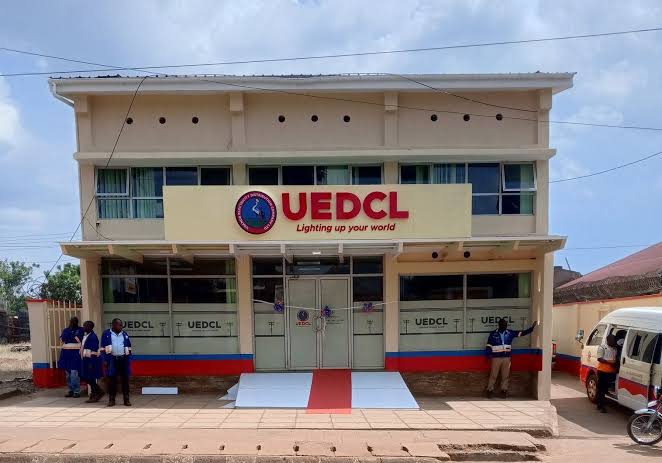
By Swift Reporter
Uganda’s electricity distribution crisis is increasingly turning into a business survival nightmare, with furious traders under the National Entrepreneurs and Traders Association (NETA) demanding the immediate resignation of Uganda Electricity Distribution Company Limited (UEDCL) Acting Managing Director, Eng. Joselynne Rwabwogo, over persistent blackouts that continue to cripple businesses across the country.
The traders accuse UEDCL’s leadership of failing to deliver one of its most fundamental responsibilities: providing reliable electricity to consumers who depend on the service to run their businesses, preserve merchandise, operate machinery and earn a living.
Led by NETA President and Founder, Dr Thadeus Musoke Nagenda, the traders say frequent power interruptions, particularly during the ongoing rainy season, have become unbearable, with businesses suffering financial losses from damaged electrical appliances, disrupted operations and spoiled goods.
Speaking to journalists on Thursday, Musoke said the situation had deteriorated in recent weeks, leaving traders struggling to meet business obligations despite continuing to incur electricity-related expenses.
He expressed particular concern about power fluctuations whenever electricity is restored, saying sudden surges damage equipment and expose business owners to additional costs that they can hardly afford.
“We are calling for the immediate resignation of the Acting MD UEDCL Eng. Joselynne Rwabwogo over her failure to provide stable and reliable power supply to the community,” Musoke said.
He argued that leadership positions in public service should come with measurable responsibility and accountability, insisting that Ugandans should not continue suffering while those entrusted with managing essential services remain comfortable in their offices.
Musoke revealed that traders had initially welcomed Rwabwogo’s appointment, hoping her leadership would bring meaningful improvements to electricity distribution and resolve longstanding challenges. However, he said their expectations had instead been met with worsening frustrations.
“We were initially pleased when she was appointed but since she took office, things have gone from bad to worse,” he said.
Beyond demanding Rwabwogo’s resignation, NETA is calling for a comprehensive and independent government investigation into UEDCL’s operations to establish why electricity reliability remains a major challenge despite the importance of the institution and the resources allocated to the electricity sector.
The association wants investigators to examine the company’s infrastructure management, operational efficiency, investment priorities and the effectiveness of its leadership in responding to consumer complaints.
Musoke also announced that NETA had launched a nationwide mobilisation exercise to document losses suffered by traders because of unreliable electricity supply.
He appealed to affected business owners to submit evidence of damaged equipment, spoiled merchandise and other losses so that the association can compile a comprehensive record of the economic impact of the outages.
“For now we are mobilising and calling upon Uganda traders who have lost their valuable goods and equipment as a result of power issues to come to our offices, visit our portal or send us an email. We are compiling all these cases,” he said.
The traders’ anger comes amid growing complaints about electricity interruptions in Kampala and several other parts of the country, raising serious questions about the capacity of UEDCL to maintain a reliable distribution network.
Meanwhile, UEDCL has for several months been attributed the challenges to ageing infrastructure, overloaded substations and rapidly increasing customer numbers, arguing that demand has grown faster than investments in the distribution network.
According to the company, its customer base increased from 1.64 million in 2021 to 2.78 million in 2026, representing growth of nearly 70 per cent. Electricity demand has also increased by approximately 60 per cent over the same period.
While these explanations point to genuine infrastructure challenges, traders insist that Ugandans cannot indefinitely bear the consequences of poor electricity reliability while businesses lose money, equipment gets damaged and productivity suffers.